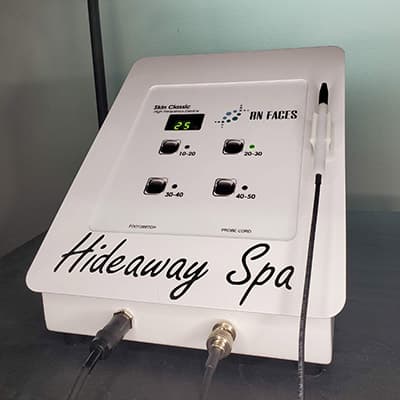
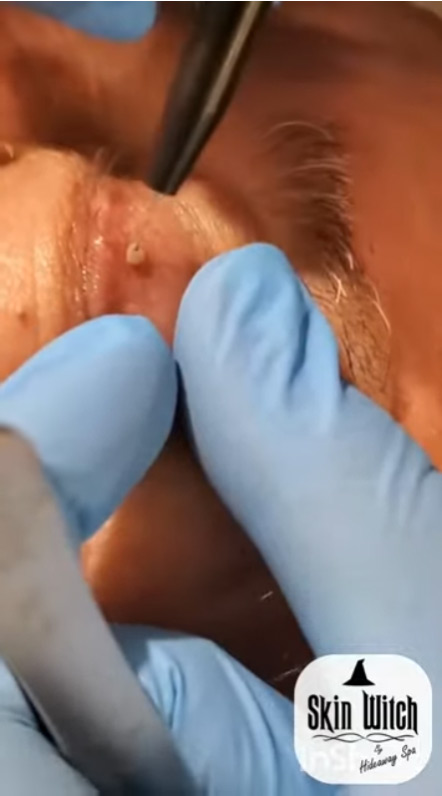
Watch Real Treatment Sessions
See exactly how quickly and safely thermolysis treatments are performed
Pitted Scar Rejuvenation Example
Complete cyst scar treatment demonstration from consultation to completion
Conditions Treated with Thermolysis
Thermolysis effectively treats a wide range of benign superficial skin lesions. Below are the most common conditions we address in our Windsor clinic.
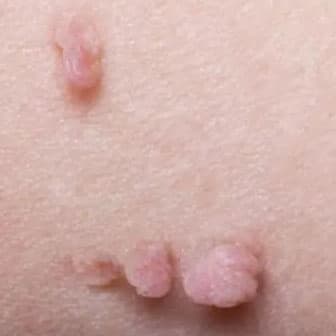
Skin Tags (Acrochordons)
Small, soft, benign flaps of skin commonly found on the neck, underarms, eyelids, and skin folds. Thermolysis rapidly dehydrates the tissue; the treated tag naturally falls off within 3-7 days.
Treatment time: 5-20 seconds per tag depending on size
Learn More About Skin Tags →
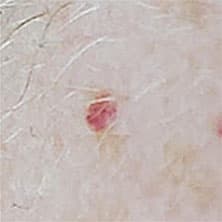
Cherry Angiomas
Small, bright red vascular lesions caused by clustered blood vessels. Thermolysis coagulates the vessels instantly, with visible clearance during treatment.3
Treatment time: Seconds; visually clears immediately
Learn More About Cherry Angiomas →
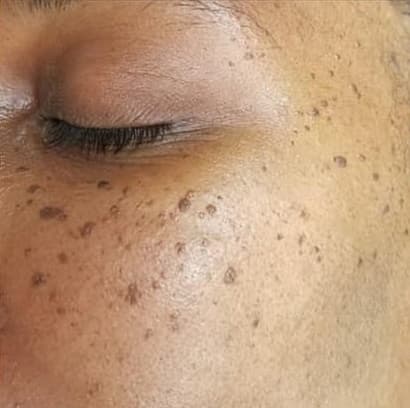
Dermatosis Papulosa Nigra (DPN)
Benign, dark papules typically appearing on darker skin tones. Thermolysis is highly effective when performed with appropriate technique to minimize pigmentation changes.
Treatment time: 5-30 seconds per lesion depending on size
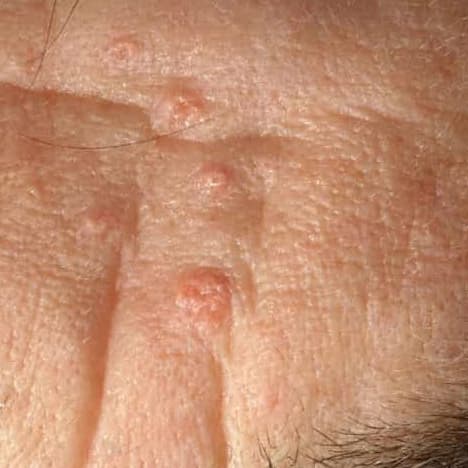
Sebaceous Hyperplasia
Enlarged sebaceous glands appearing as small, soft bumps, often on the forehead and cheeks. Thermolysis collapses the glandular tissue, reducing bump prominence.
Treatment time: 5-20 seconds per lesion
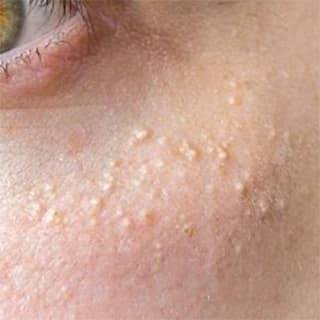
Milia
Tiny white keratin-filled cysts that can be safely extracted and cauterized using thermolysis for clean, precise results.
Treatment time: 5-10 seconds per cyst
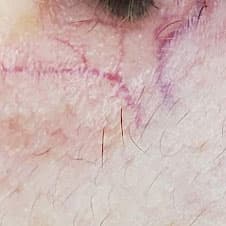
Telangiectasia (Broken Capillaries)
Small visible blood vessels on the face that can be coagulated with precise thermolysis. Vascular lasers may be preferable for extensive networks depending on size and depth.
Treatment time: Seconds per millimeter of vessel
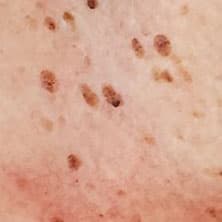
Keratoses & Surface Blemishes
Small benign rough patches, including some seborrheic or senile keratoses. Larger or clinically suspicious lesions require medical assessment before treatment.
Treatment time: 5-30 seconds depending on size and depth
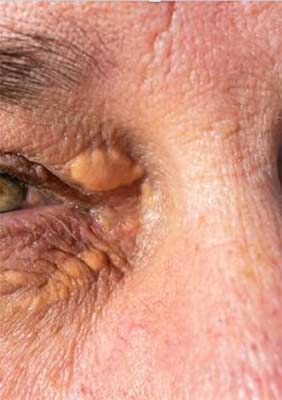
Xanthelasma (Cholesterol Deposits)
Soft yellowish bumps, often appearing around the eyelids. Can be safely treated with thermolysis. Multiple sessions may be necessary for larger deposits.
Treatment time: 10-20 seconds per deposit
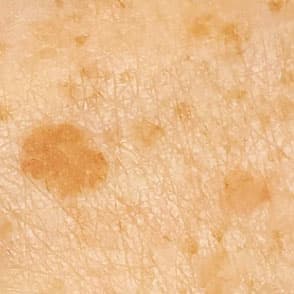
Lentigines / Hyperpigmentation
Dark spots caused by sun exposure, hormones, or inflammation. Superficial sun spots often respond well to thermolysis. Deeper diffuse pigmentation (melasma, post-inflammatory marks) may be better addressed through microchanneling or targeted facial treatments.
Treatment time: Evaluated spot-by-spot; most clear after one session
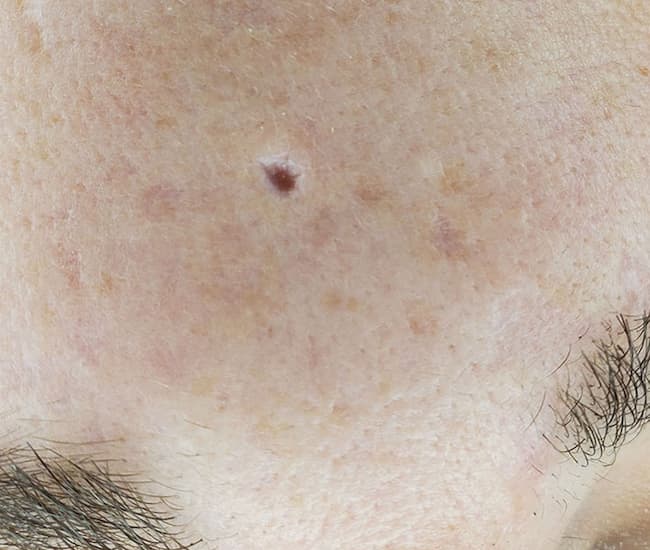
Pitted Scars
Thermolysis can effectively improve pitted scars through controlled tissue regeneration. Multiple treatments typically necessary for optimal results. Smaller marks may also respond to microchanneling.
Treatment time: Variable — see video demonstration above
For larger scar or hypermigmentation improvement, consider our microchanneling treatments →
Thermolysis vs Laser vs Cryotherapy/Excision — Treatment Comparison
Understanding your options helps you make informed decisions. Below is a fact-based comparison of thermolysis against other common treatment modalities for benign skin lesions.
| Feature |
Thermolysis (Our Method) |
Laser Treatment |
Cryotherapy / Surgical Excision |
| Technology |
High-frequency radiofrequency (13.56-27.12 MHz)1 |
Focused light energy (various wavelengths) |
Liquid nitrogen freeze or surgical cutting |
| Precision |
Sub-millimeter precision; ideal for small, delicate areas |
Beam width varies (1-10mm typical); broader treatment area |
Variable; surgical excision most precise |
| Pain Level |
Brief sting/burning sensation during treatment2 |
Mild to moderate; often requires cooling |
Cryotherapy: intense cold sting; Excision: requires local anesthesia |
| Treatment Duration |
Seconds per lesion |
Minutes per area; multiple passes may be needed |
Cryotherapy: seconds; Excision: 10-30 minutes + suturing |
| Downtime |
Minimal; 3-10 days healing, light crusting |
Days to weeks; depends on depth and area treated |
Cryotherapy: 1-2 weeks; Excision: 2-4 weeks with stitches |
| Scarring Risk |
Very low when properly performed1 |
Low to moderate; depends on settings and skin type |
Cryotherapy: moderate (hypopigmentation risk); Excision: higher (linear scar) |
| Skin Tone Suitability |
Safe for all skin tones (Fitzpatrick I-VI) |
Some lasers contraindicated for darker skin; risk of pigmentation changes |
Generally safe; cryotherapy carries hypopigmentation risk |
| Cost per Treatment |
$50-200 (see pricing below) |
$150-400+ per session |
Cryotherapy: $100-300; Excision: $200-600+ (medical procedure) |
| Best Applications |
Small lesions, facial work, eyelids, precision removal |
Larger vascular areas, diffuse pigmentation, hair removal |
Cryotherapy: warts, thick keratoses; Excision: deep/complex lesions requiring biopsy |
Cost estimates reflect typical Windsor/Ontario market rates as of 2025. Individual treatment needs may vary.
← Scroll horizontally to view full comparison →
How Thermolysis Works — The Science Behind the Treatment
Thermolysis uses a handpiece connected to a high-frequency radiofrequency generator. When the probe tip briefly contacts the lesion, electrical energy produces localized heating through ionic agitation within tissue fluids. This resistive heating causes targeted tissue to coagulate and dehydrate, eliminating the imperfection.1
The probe tip is extremely fine (sub-millimeter diameter) and contact time is measured in milliseconds. This precision minimizes collateral thermal damage to surrounding tissue. The treated area naturally desquamates (sheds) within several days as the epidermis regenerates.2
Key Technical Points
- Energy delivered in short pulses (milliseconds) to prevent deep thermal spread
- Probe tip diameter enables sub-millimeter precision for delicate areas (eyelids, nose)
- No cutting or surgical excisions involved; works at skin surface level
- Temperature reaches 60-100°C at probe tip, causing protein denaturation and coagulation
- Surrounding tissue protected by brief contact duration and precise energy delivery
Scientific Overview: RF Electrodessication & Thermolysis
Thermolysis, also termed high-frequency or radiofrequency (RF) electrodessication, operates within ISM-designated radiofrequency bands — most commonly 13.56 MHz or 27.12 MHz (both harmonic multiples of 6.78 MHz). The specific frequency varies by manufacturer but remains within this medically recognized range.1
When the active electrode probe briefly contacts tissue, oscillating RF current induces ionic agitation within intracellular and extracellular fluids. This agitation generates resistive (Joule) heating confined to the target tissue, causing localized temperature rise (typically 60-100°C) that produces protein denaturation and cellular coagulation, effectively desiccating or carbonizing the lesion.
Each pulse lasts only milliseconds, producing controlled, superficial coagulative effects. By targeting lesions with sub-millimeter precision, lateral thermal diffusion is minimized, protecting surrounding dermis. Treated tissue naturally desquamates within days as the epidermis regenerates.2
This modality differs from traditional electrosurgery and laser ablation. It involves no cutting electrode and no photothermal vaporization — only resistive heating from high-frequency alternating current. Thermolysis (electrodessication) is well-documented for cosmetic treatment of benign epidermal irregularities including skin tags, cherry angiomas, sebaceous hyperplasia, milia, and other superficial lesions.3
Session Details, Healing Timeline & Aftercare
During the session
Each appointment begins with consultation and lesion assessment. Treatment is performed systematically, with most individual lesions requiring only seconds of contact time. Multiple lesions are typically treated within a 10-20 minute session.
Typical healing timeline
- Immediate: Treated area may appear slightly raised, red, or crusted
- 24-72 hours: Crust formation begins; lesion starts dehydrating
- 3-7 days: Crust sheds naturally; treated tissue falls away
- 7-21 days: Re-epithelialization continues; color and texture normalize
- Up to 4 weeks: Final healing; possible temporary pigmentation changes that typically resolve
Aftercare protocol
- Keep treated sites clean and dry for first 24 hours
- Apply thin layer of provided antibiotic ointment (bacitracin) as directed
- Avoid direct sun exposure during healing; apply SPF 30+ after re-epithelialization
- Do not pick, scratch, or forcibly remove crusts — allow natural shedding to prevent scarring
- Avoid swimming pools, hot tubs, and excessive sweating for 48-72 hours
Thermolysis for Permanent Hair Removal
In addition to treating skin lesions, thermolysis (also known as electrolysis or thermolytic hair removal) can be used for permanent hair reduction on small facial areas. This application uses the same high-frequency technology but targets individual hair follicles.4
How thermolysis hair removal works
A fine probe is inserted alongside the hair shaft into the follicle. High-frequency energy heats and destroys the hair matrix cells responsible for growth. Once destroyed, the follicle cannot produce new hair. This is considered a permanent hair removal method when performed correctly.4 For a full science-backed comparison of thermolysis/electrolysis with laser, waxing, shaving and creams, see our Ultimate Hair Removal Guide: The Options and Science Behind Them.
Treatment areas (face and neck only)
We offer thermolysis hair removal for small facial areas where precision is essential:
- Upper lip
- Chin and jawline
- Between eyebrows (unibrow)
- Sideburns
- Individual stray hairs on face or neck
What to expect
- Treatment time: Varies by area density and hair thickness; pricing is time-based
- Sessions needed: Multiple sessions required for complete clearance (hair grows in cycles)
- Sensation: Brief heat/pinch per hair; generally well-tolerated
- Results: Permanent reduction; treated follicles do not regenerate
Hair Removal Pricing
The same as blemish correction, $50 for a single spot or $100 per 10 minutes
Time-based pricing ensures fair treatment regardless of area. Consultation recommended to estimate total sessions needed.
Note: Thermolysis hair removal requires multiple sessions as hair grows in cycles. Treatment targets active growth-phase hairs; follicles in dormant phases require subsequent appointments for complete clearance.
Candidate Assessment & Contraindications
Ideal candidates: Adults with benign superficial skin lesions seeking rapid, minimally invasive treatment. Suitable for all skin types and tones when performed appropriately.
Contraindications and cautions:
- Active infection at treatment site
- Uncontrolled diabetes (impaired wound healing)
- Anticoagulant medications (increased bleeding risk)
- Pacemakers or electronic implants (RF interference risk)
- Pregnancy (elective cosmetic procedures typically deferred)
- History of keloid scarring (individual assessment required)
- Suspicious or changing lesions (medical evaluation required first)
Risks, Side Effects & Realistic Expectations
Thermolysis is considered low-risk when performed by trained practitioners. However, all procedures carry potential side effects:
Common, expected side effects:
- Temporary redness and swelling (resolves within hours to days)
- Crust formation (normal part of healing; sheds in 3-10 days)
- Mild discomfort during healing period
Possible complications:
- Temporary hypo- or hyperpigmentation (especially in darker skin tones; typically resolves in weeks to months)
- Prolonged redness (rare; may persist several weeks)
- Incomplete clearance requiring additional treatment (larger or deeper lesions)
- Scarring (rare when proper technique and aftercare followed)
- Infection (rare with proper hygiene)
Important: Any lesion that appears irregular, is changing, bleeding, or clinically suspicious will be referred for medical assessment before treatment. Thermolysis is only performed on confirmed benign, superficial lesions within cosmetic scope of practice.
Clinical Results — Before & After Photos
These images document actual client outcomes following thermolysis treatment at Hideaway Spa. Results vary by lesion type, size, and individual healing response.
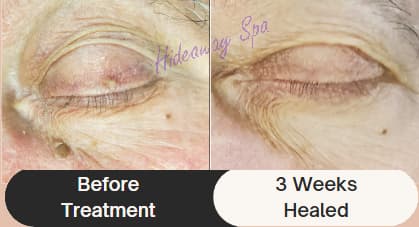
Skin tag directly on eyelid and keratosis beneath eye — complete clearance following single treatment
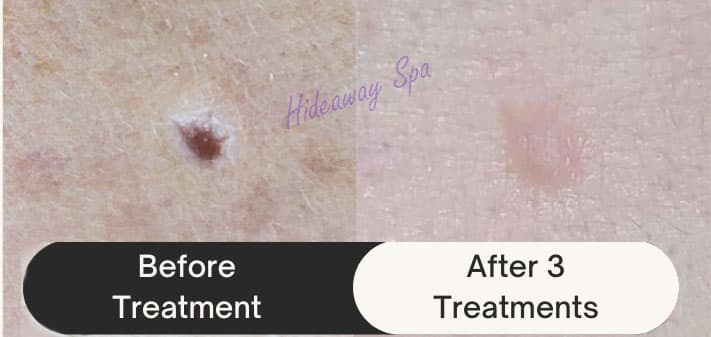
Deep cyst scar treated with thermolysis over multiple sessions — significant improvement in depth and texture
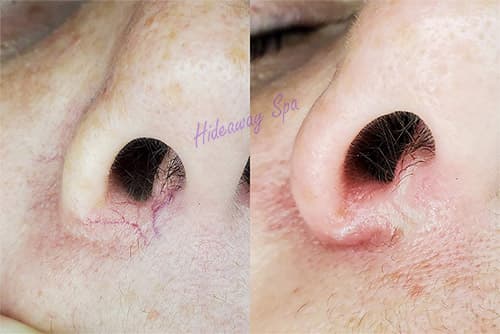
Telangiectasia (broken capillaries) around nostril — coagulated during single treatment session
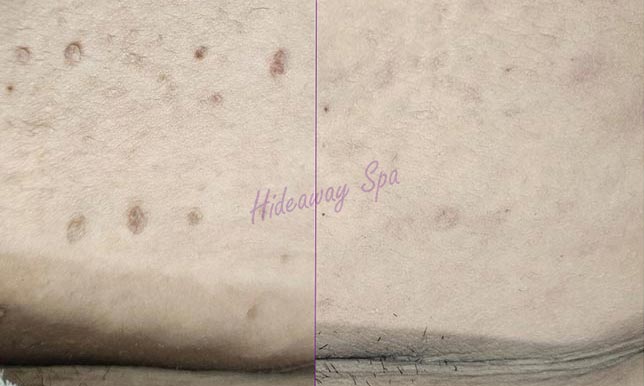
Underarm with a cluster of skin tags, minor pigmentation remains after a single treatment
Frequently Asked Questions
What conditions can be treated with thermolysis?
With the Skin Classic device, we're capable of treating Acrochordons (Skin Tags), Lentigines (Sun Spots), Dermatosis Papulosa Nigra (DPN), Cyst Scars, Cherry Angiomas, Milia, Sebaceous Hyperplasia, Telangiectasia (Broken Capillaries), Keratoses, Melasma, and Xanthelasma (Cholesterol Deposits). It can also be used for electrolysis hair removal.
View our skin tag treatment page →
View our cherry angioma treatment page →
How long does thermolysis treatment take?
Treatment duration varies by lesion type and size. Cherry angiomas may take only 3-5 seconds, while larger keratoses can require 1-2 minutes. Multiple small lesions are typically treated within a 10-20 minute session. See video demonstrations above for real-time examples.
Does thermolysis hurt?
Most clients experience a brief, sharp sensation during treatment. Pain level varies by treatment location — some areas feel like mild pressure while others produce a momentary burning sensation. The discomfort typically dissipates immediately once the probe is lifted. Treatment speed makes it generally well-tolerated without anesthesia for small lesions.
Can thermolysis treat moles?
No. We do not treat moles at the spa. Any mole that is changing, bleeding, irregular, or medically questionable must be evaluated by a physician or dermatologist. While thermolysis can cauterize tissue, moles fall outside our cosmetic scope of practice for safety, insurance, and medical ethics reasons. Only confirmed benign, superficial lesions may be treated after visual assessment.
How many thermolysis sessions will I need?
Many lesions achieve complete clearance in a single session. Larger or more vascular lesions may require 2-3 follow-up treatments spaced several weeks apart. Pitted scar rejuvenation typically requires multiple sessions (3-6) for optimal results. Your specific treatment plan will be discussed during consultation.
What is the healing process and aftercare like after a thermolysis treatment?
Healing is typically quick for benign lesions: Immediately after treatment, the area may appear slightly raised, red, or crusted. A small scab or crust usually forms within 24–72 hours and sheds naturally in 3–7 days, revealing fresh skin. Most visible healing (normal color and texture return) occurs within 7–21 days, though in some cases temporary pinkness or minor pigmentation changes may take several months to fully resolve.
We provide a detailed aftercare packet with your service, including these key instructions:
- Keep the area clean and dry initially; apply a thin layer of recommended antibiotic ointment to prevent infection.
- Avoid picking, scratching, or removing crusts prematurely — let them fall off naturally.
- Skip direct sun exposure, tanning, saunas, pools/hot tubs, heavy sweating, and makeup over crusted spots for 48–72 hours (or until healed).
- Use broad-spectrum SPF 30+ daily (even indoors) once the area has re-epithelialized — this is crucial to prevent prolonged or permanent pigmentation changes.
- Avoid harsh products, exfoliants, or irritants on the area during recovery.
Most clients see excellent cosmetic results with minimal visible signs after 1–2 weeks when following aftercare. If you notice signs of infection (increased redness, pus, swelling) or prolonged changes, contact us right away.
Will thermolysis leave a scar?
When performed correctly on appropriate lesions, scarring is uncommon or minimal. Risk factors for scarring include: overly aggressive treatment depth, picking at healing crusts, inadequate aftercare compliance, and treatment of lesions that extend too deep into the dermis. Proper technique and strict adherence to post-treatment instructions minimize scarring risk.1
What is the difference between thermolysis and laser treatment?
Thermolysis uses high-frequency electrical energy (radiofrequency at 13.56-27.12 MHz) to generate heat through ionic agitation. Lasers use focused light energy at specific wavelengths. Key differences:
- Precision: Thermolysis offers sub-millimeter precision ideal for small lesions and delicate areas
- Skin tone safety: Thermolysis works safely on all skin tones; some lasers contraindicated for darker skin
- Cost: Thermolysis typically lower per-treatment cost
- Applications: Lasers preferred for larger vascular areas; thermolysis optimal for pinpoint work
Both are effective; selection depends on lesion type, size, location, and patient factors. See comparison table above for detailed analysis.
What other names might thermolysis be called?
Thermolysis treatment may be referred to by various terms including: electrodessication, electrosurgery, radiofrequency cautery, electrocoagulation, high-frequency cautery (HF cautery), cosmetic cauterization, radiofrequency ablation, and RF skin revision. These terms generally describe similar high-frequency electrosurgical techniques.
Is thermolysis similar to other RF devices I've heard of?
Yes. Professional high-frequency radiofrequency devices such as Lamprobe, Skin Classic, ThermoClear, SkinSheer, SIIT Pro, Perfect Touch, Skin Sheek, VascuTouch, Lamskin, and ThermoLo all operate on the same thermolysis principle. They safely treat minor skin irregularities using localized RF energy to coagulate and desiccate target tissue. We use the Skin Classic system, but technology and expected outcomes are comparable across these devices.
Can I have thermolysis if I have darker skin?
Yes. Thermolysis is safe for all skin tones (Fitzpatrick types I-VI) when performed with appropriate technique. Unlike some lasers that carry higher risk of pigmentation changes in darker skin, radiofrequency energy does not target melanin. However, post-inflammatory hyperpigmentation remains possible with any skin injury. Proper treatment parameters and strict sun protection minimize this risk.2
How soon can I wear makeup after treatment?
Mineral makeup may be applied approximately 90 minutes post-treatment if necessary, though waiting 24 hours is preferable. Avoid liquid foundations and heavy coverage for first 48 hours. Do not apply makeup directly over crusted areas — allow natural healing and shedding before resuming normal cosmetic use.
Is thermolysis safe during pregnancy or while breastfeeding?
Thermolysis is a superficial, localized treatment with no known systemic effects. It's generally considered safe for minor benign lesions when necessary, including during pregnancy (after the first trimester in some cases) and while breastfeeding, as there's no evidence of risk to the fetus or breast milk. However, due to limited specific studies and potential skin sensitivity changes during pregnancy, we recommend postponing non-essential treatments during active pregnancy as a precaution. For those planning pregnancy, there's no concern — it doesn't affect fertility or conception. Always disclose pregnancy, breastfeeding, or plans during consultation so we can assess and tailor accordingly. Safer alternatives like gentle skincare can be discussed if deferring.
Is Hideaway Spa certified, insured, and accredited?
Yes. All treatments are performed by certified professionals with specialized training in thermolysis techniques. Hideaway Spa maintains comprehensive insurance coverage for all cosmetic procedures and holds accredited membership with the Better Business Bureau. Learn more on our About page.
About Erika — Certified Esthetician & Thermolysis Specialist
Erika brings over 15 years of experience in advanced skincare and has worked alongside dermatology teams using lasers, RF devices, and precision thermolysis. She takes an evidence-based, personalized approach to treatment in a private studio setting. Learn more about Erika →
Informed Consent & Medical Referral Protocol
Informed written consent is required before all thermolysis treatments. We request permission for before/after photography for clinical records and marketing purposes; clients may decline public sharing.
Medical referral protocol:
Any lesion exhibiting irregular borders, color variation, rapid growth, bleeding, or other concerning features will be referred for medical evaluation before treatment. Hideaway Spa performs cosmetic thermolysis exclusively on confirmed benign superficial lesions. When medical assessment is indicated, we provide referral recommendations and defer treatment pending physician clearance.
Disclaimer: Hideaway Spa provides cosmetic thermolysis for benign skin lesions. This is not a medical service. Any clinically suspicious lesion requires evaluation by a physician or dermatologist.